Every few years, a technology arrives that people assume will end advertising as a career. Artificial intelligence is the latest, and it is a serious one: it can write copy, generate images and plan media in seconds. So it is reasonable to ask, before enrolling in an AI in advertising course, whether the field is still worth entering at all. It is, and the reason is more interesting than a simple reassurance.
Artificial intelligence is changing advertising quickly, altering how research is done, how ideas are tested, how assets are produced and how media is bought. What is not changing is the need for someone who can originate a strong idea and tell whether it is any good. Those two abilities are becoming more valuable, not less. For a student choosing a direction after Class 12, and for a parent assessing that choice, this is where the opportunity sits.
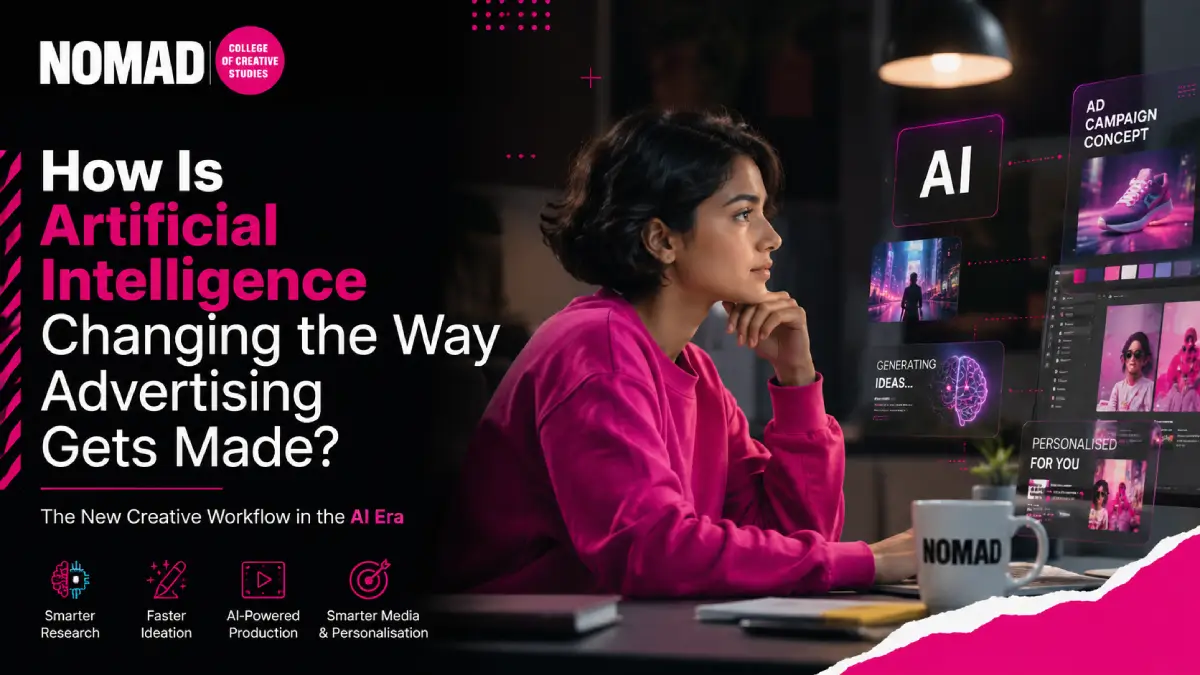
Artificial intelligence is changing advertising by automating research, speeding up ideation, generating production assets and personalising media at scale. Generative AI and machine learning absorb the repetitive, data-heavy work, while people provide the ideas, taste and strategic judgement. AI reshapes the advertising workflow, and it raises the premium on the human creativity that decides what gets made.
What Does Artificial Intelligence Actually Do in an Agency?
In an advertising agency, artificial intelligence acts as a fast assistant across the campaign process. Here is what AI in advertising looks like day to day: it summarises research, suggests directions, drafts early copy, generates image and video options and helps plan and buy media. Most of it supports the team rather than replacing it.
Speeding Up Research and Ideation
Understanding an audience once meant days of reading reports and gathering references. AI tools now compress that work. Teams commonly use them to:
• Summarise market and audience research in minutes
• Spot patterns and trends across large data sets
• Generate mood boards, reference visuals and first draft concepts
• Produce many quick variations of a headline or idea
The value is speed and range: a copywriter can explore twenty starting points instead of two, then develop the strongest. Machine learning sorts, and the person selects.
Production, Personalisation and Media Buying
Once an idea is agreed upon, AI helps make and deliver the work. Generative AI can create image options, rough video, voice-overs and layout variations. In media, automation and personalisation let one campaign run in hundreds of tailored versions. Data-driven advertising and programmatic media buying use machine learning to place adverts and adjust spending as results come in.
Will Artificial Intelligence Replace Creative People?
Artificial intelligence is unlikely to replace creative people, because it has no taste, cultural understanding or point of view. It produces plenty of material, but cannot reliably say which idea is genuinely good, which fits a brand or which will move an Indian audience. Those judgments belong to people.
AI generates from patterns in existing work, so it is strong at variation and speed but weaker at originality and nuance. Clients still buy ideas and judgment, not output. This is not people against machines but people working with machines, which is why AI and creativity increasingly go hand in hand.
Where AI helps and where people lead:
| What AI Handles Well | What People Still Own |
| Speed, scale and repetitive tasks | The original idea and the point of view |
| Summarising research and data | Cultural insight and judgement of taste |
| Generating many variations quickly | Deciding which idea is actually good |
| Personalising and delivering at scale | Brand strategy and creative direction |
| Drafting first versions of copy and visuals | Editing, refining and giving work meaning |
If you are comparing creative courses after Class 12, it helps to see how a programme puts these tools to work. Explore NoMAD’s Bachelor’s in Advertising and Communication Design to see how strategy, design and technology are taught together.
Know More: Traditional Courses vs New-Age Creative Careers After 12th: A Clear Comparison of Scope
Which Skills Become More Valuable, Not Less?
As routine tasks get automated, the skills that gain value are the ones AI cannot copy: original thinking, judgement of taste and the ability to direct the tools well. In an AI-shaped industry, knowing what to make and why matters more than any single tool.
Ideas, Taste and Critical Judgement
When anyone can generate a hundred options in a minute, the rare skill is knowing which one to keep. That is taste, built through practice and feedback rather than downloaded. Critical judgement, saying honestly what is strong, weak or off-brand, becomes a daily requirement.
Knowing How to Direct the Tools
The second valuable skill is creative technology fluency, or getting good results from AI. This means prompt craft, asking a tool for the right thing in the right way, and shaping and combining what it produces. Think of it as art direction for machines. Students who collaborate with AI, rather than fear it, hold an advantage.
How Should a Student Prepare for an AI-Shaped Industry?
To prepare for an AI-shaped advertising industry, build strong creative fundamentals first, learn to use AI as a collaborator, and develop a portfolio that shows your thinking. The tools keep changing, so the goal is judgment and adaptability.
1. Master the fundamentals of design, writing and strategy, since these let you judge and direct AI output.
2. Learn AI tools as a collaborator, not a shortcut, so you understand their strengths and limits.
3. Build a portfolio that shows how you think, not only what you can produce.
4. Stay curious and keep experimenting, because the industry rewards people who adapt quickly.
5. Choose learning that is hands-on and industry-connected, so you practise on real briefs.
When you are evaluating an ai in advertising course or a wider creative degree, look for real client projects, portfolio development, practitioner mentors and a curriculum that treats AI as part of the work. For a closer look, read our related guide on the NoMAD blog.
Know More: How a Copywriting Course Prepares You for Advertising Agency Roles
How Does NoMAD Build AI-Aware Creative Thinking?
NoMAD College of Creative Intelligence builds AI-aware creative thinking by teaching design, writing, strategy and technology together, with modern tools used inside real, hands-on projects. Its Bachelor’s in Advertising and Communication Design focuses on ideas, taste and portfolio building, the skills that stay valuable as automation grows.
NoMAD offers a Bachelor’s in Advertising and Communication Design and a Post Graduate Diploma in Advertising and Media, both built around live briefs, real client projects and industry mentorship. The model is hands-on and portfolio first, so students practise the creative direction and judgement that AI cannot replace. This mirrors the creative intelligence approach that shapes how NoMAD teaches.
NoMAD also describes its studios as AI-first and integrates AI tools and workflows across its creative training, reflecting the way modern agencies already work. With a base in Mumbai, India’s creative capital, a presence in Bangalore and a global exchange pathway through Miami Ad School, students gain both local industry exposure and an international perspective.
Frequently Asked Questions
Do advertisers really use artificial intelligence day to day?
Yes. Many agencies use AI tools daily for research, first draft copy, image generation, dynamic ad versions and media optimisation. It speeds up the work rather than replacing the team. The idea, the strategy, and the final decisions still come from people.
Is creativity still a safe career choice?
Creativity remains a resilient career choice because its core strengths, original ideas, taste and judgement, are exactly what automation cannot reproduce. Demand is shifting towards people who can think creatively and direct AI tools well. A strong portfolio and adaptable skills matter most for the future of advertising.
Do I need to learn to code for a career in AI and advertising?
No, you do not need to learn to code to work in advertising, even as AI becomes common. Most creative roles rely on ideas, writing, design and directing AI tools rather than building them. Comfort with technology and prompt craft help, but strategy and taste matter most.
What are AI tools for advertising used for?
AI tools for advertising are used across the campaign process: audience research, idea generation, copywriting drafts, image and video creation, personalisation and programmatic media buying. They help teams move faster and test more options. The tools produce raw material; people shape it to fit the brand and audience.
Does NoMAD teach AI as part of its advertising programme?
NoMAD College of Creative Intelligence teaches creative skills alongside modern tools, and treats AI as part of hands-on, portfolio-driven learning rather than a separate subject. Its Bachelor’s in Advertising and Communication Design and Post Graduate Diploma in Advertising and Media focus on ideas, real client projects and mentorship, so students learn to direct technology, not only use it.
Build a Future-Ready Creative Career at NoMAD
Artificial intelligence is changing how advertising gets made, yet it raises the value of what a strong creative education develops: ideas, taste, judgement and the confidence to direct powerful tools. If you are planning your next step after Class 12, the right programme should build those strengths on real work.
Speak to a NoMAD admissions counsellor to understand the Advertising and Communication Design curriculum, the portfolio focus and the admissions process, or download the programme brochure for full curriculum details.
Related Posts