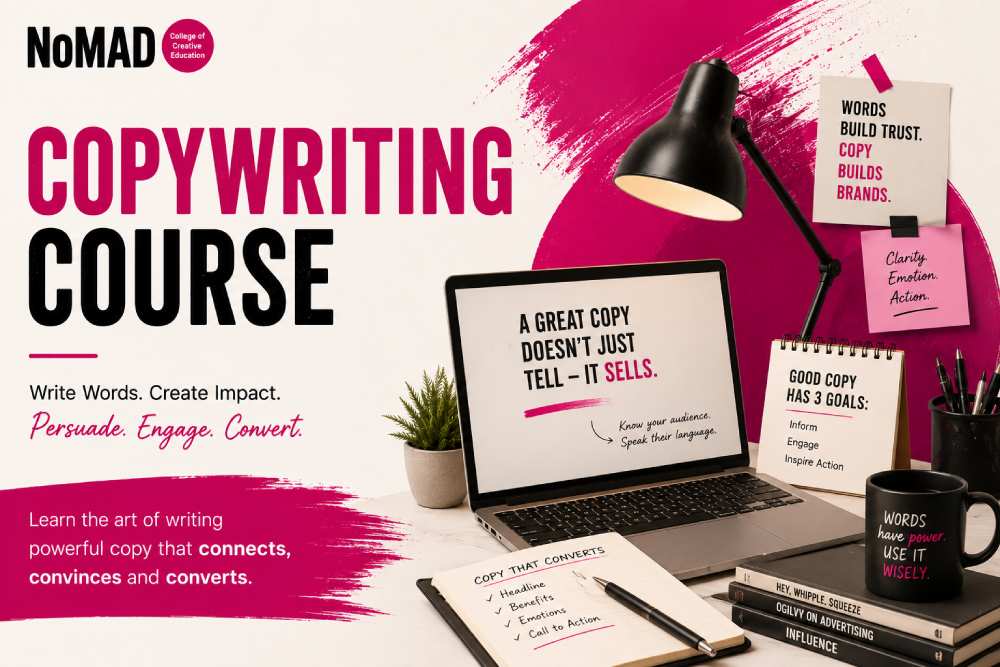
A copywriting course does far more than polish your grammar. It trains you to think in ideas, to write in a brand voice and to build a portfolio that advertising agencies genuinely hire from. If you are exploring creative careers after Class 12, understanding what a copywriting course entails will help you decide with confidence.
Many students and parents ask whether writing leads to a real career, and whether a course beats teaching yourself. Agencies do not hire people who can only write. They hire people who solve problems with words and work inside a creative team, and a good course is built to develop exactly that.
| A copywriting course prepares you for agency roles by building three core abilities: generating ideas from a brief, crafting copy in a defined brand voice, and collaborating with an art director. Paired with a portfolio of live projects, these skills match what advertising agencies look for in junior copywriters. |
Which Skills Does a Copywriting Course Build?
A copywriting course builds concept thinking, writing craft, brand-voice control, collaboration and portfolio development. These are the capabilities that advertising agencies assess when hiring for junior roles.
The most useful courses treat copywriting as applied creative problem solving, not a grammar exercise. Two skill areas matter most.
Concept and Idea Generation
The heart of advertising copywriting is the concept: a single, clear idea that a campaign is built around. A course teaches you to interpret a brief, ask sharper questions and generate many ideas before selecting the strongest. You learn to tell a clever line apart from a genuine idea. This is the skill that separates a writer from a copywriter, and the one agencies value most.
Craft, Tone and Brand Voice
Once an idea is set, craft brings it to life. You learn to write with precision, adapt tone for different audiences and hold a consistent brand voice across every touchpoint. The same idea should sound different for a challenger start-up and a heritage bank. You also practise writing to formats and constraints, from a six-word headline to a full campaign, which mirrors the demands of agency work.
What Does an Agency Copywriter Actually Do?
An agency copywriter turns a client brief into ideas and words. The role covers concept development, writing ad copy across formats, shaping brand voice and presenting work, almost always in partnership with an art director.
Inside an advertising agency, the copywriter sits within the creative team, and the day rarely begins with writing. It begins with a brief that explains the brand, the audience and the problem to solve. From there, the copywriter develops concepts and writes headlines, scripts, social captions, website copy and campaigns, then refines the work through feedback. Writing is the visible output, but thinking is the real job.
How Do Writers and Art Directors Work Together?
In most agencies, a copywriter is paired with an art director to form a creative team. The writer shapes the idea and the words, the art director shapes the visual and the design, and together they develop the concept from brief to finished campaign.
This partnership is one of the defining features of advertising. Ideas are rarely written first and designed later. They are developed together, with words and visuals shaping each other from the start. A course with designer collaboration prepares you for this, teaching you to think visually and build on a partner’s thinking. The table below shows how the two roles complement each other.
| Focus area | Copywriter | Art director |
| Primary craft | Ideas, words and brand voice | Ideas, visual design and art direction |
| Typical outputs | Headlines, scripts and campaign copy | Layouts, visual concepts and design systems |
| Shared work | Concept development from the brief | Concept development from the brief |
| Growth path | Senior Copywriter, then Creative Director | Senior Art Director, then Creative Director |
Both roles begin with the same brief and grow towards the same creative leadership path. Understanding this early makes you a stronger, more employable collaborator.
What Does a Hiring-Ready Copywriting Portfolio Show?
A hiring-ready copywriting portfolio shows a range of ideas, not only finished writing. Agencies look for concept thinking, campaign range, clear rationale and evidence that you can solve briefs, rather than a collection of polished sentences.
In creative hiring, the portfolio matters more than marks. A strong copy portfolio usually includes:
• Three to six campaign concepts that each solve a clear brief
• A mix of formats, such as print, digital, social and experiential
• Short write-ups that explain the idea and the thinking behind it
• Evidence of collaboration with an art director or designer
• One or two pieces that show range or a distinctive voice
The best portfolios prove how you think, not only what you can write. For more, the copywriting course guide covers portfolio building in detail.
| Comparing creative courses after Class 12?Look for programmes that build a portfolio alongside the theory. Explore an advertising and communication design programme that includes live briefs to see how portfolio-first learning actually works. |
How Do You Break Into an Agency?
You break into an advertising agency by combining a strong portfolio with real experience and industry relationships. Internships, live briefs, networking and mentorship are the most reliable routes into a junior copywriting role.
Exposure and relationships matter as much as talent. Two routes stand out.
Internships and Live Briefs
Nothing prepares you for agency life like doing the work. Internships place you inside a real creative environment, while live briefs let you solve genuine problems for real brands before you graduate. This builds your portfolio and your confidence, and often leads to a first role. NoMAD structures learning around live client briefs and a global and national internship programme, so students build industry experience while they study. You can review the details on NoMAD’s placement and internship page.
Networking and Mentorship
Advertising is a relationship-led industry, and mentorship accelerates the journey. Learning directly from working professionals gives you honest feedback, real-world context and access to industry networks. NoMAD’s model is built around practitioner-led teaching and industry mentors drawn from leading agencies, which helps students understand how the industry works and who to learn from.
Writing for Brands at NoMAD
At NoMAD College of Creative Intelligence, copywriting is developed within a wider advertising and communication design education, combining concept, craft, collaboration and portfolio building through real client projects.
NoMAD offers a Bachelor’s in Advertising and Communication Design and a Post Graduate Diploma in Advertising and Media, both built on hands-on, portfolio-first learning. Rather than teaching writing in isolation, students develop copywriting craft through live briefs, creative exercises and collaboration with designers, mirroring how agencies work.
With campuses in Mumbai, positioned as India’s creative capital, and Bangalore, students learn close to the agencies, brands and studios where creative careers are built. Practitioner-led faculty, mentorship and real client projects give students the experience and the portfolio that advertising roles demand.
Frequently Asked Questions
What qualifications do agencies want from a copywriter?
Most advertising agencies prioritise a strong portfolio and clear concept thinking over a specific degree. A relevant qualification in advertising, communication design or a copywriting course helps, but agencies hire on the strength of your ideas and your ability to solve briefs. Demonstrable craft, collaboration and a distinctive voice usually matter more than marks alone.
How do I build a copy portfolio with no experience?
Start by solving live or self-initiated briefs. Choose real brands, define a clear problem for each, and develop three to six campaign concepts across formats such as print, digital and social. Add short write-ups that explain your thinking, and collaborate with a designer where possible. A course with live briefs and mentorship gives you real projects to include and honest feedback to improve.
Is copywriting still in demand?
Yes. Brands still need original ideas, sharp positioning and a consistent brand voice, and these depend on human judgement. Automation can speed up drafting, but concept thinking, cultural insight and creative collaboration remain hard to replace. Copywriters who combine strong ideas with adaptability stay valued across advertising, digital and content roles.
What is the difference between copywriting and content writing?
Copywriting focuses on persuasion and ideas, usually for advertising and brand campaigns, where the goal is to prompt a response or shape perception. Content writing focuses on informing and engaging audiences over time, often through articles, blogs and guides. The two overlap, but agency copywriting leans more towards concept, brand voice and campaign thinking.
Does NoMAD teach copywriting for advertising?
NoMAD College of Creative Intelligence develops copywriting craft within its advertising and communication design programmes, rather than as a standalone subject. Students build concept, brand voice and campaign skills through live client briefs, creative exercises and collaboration with designers, supported by practitioner-led faculty and industry mentorship across its Mumbai and Bangalore campuses.
Launch Your Copywriting Career at NoMAD
A copywriting course delivers the most value when it combines ideas, craft, collaboration and a portfolio that proves your thinking. If you are ready to build a creative career in advertising, NoMAD’s portfolio-first programmes, live briefs and mentorship are designed to help you get there.
| Ready to begin?Apply now through the NoMAD enquiry form to begin your application, or download the programme brochure to explore the curriculum, admissions process and portfolio focus in detail. |
Related Posts