Choosing a graphic design diploma course or a full design degree is one of the biggest decisions creative students face after Class 12. Both paths can lead to rewarding careers in branding, advertising and visual communication, yet they differ in duration, cost and the portfolio they help you build. This guide compares the two in plain terms, so you can choose the route that fits your goals.
Quick answer: A graphic design diploma course builds practical craft and a working portfolio quickly, usually in less time than a degree. A degree adds theory, research and academic breadth across three to four years. Employers in design and advertising hire on portfolio strength, so the stronger route is the one that gives you the most real project work.
What Is the Difference Between a Diploma and a Degree in Graphic Design?
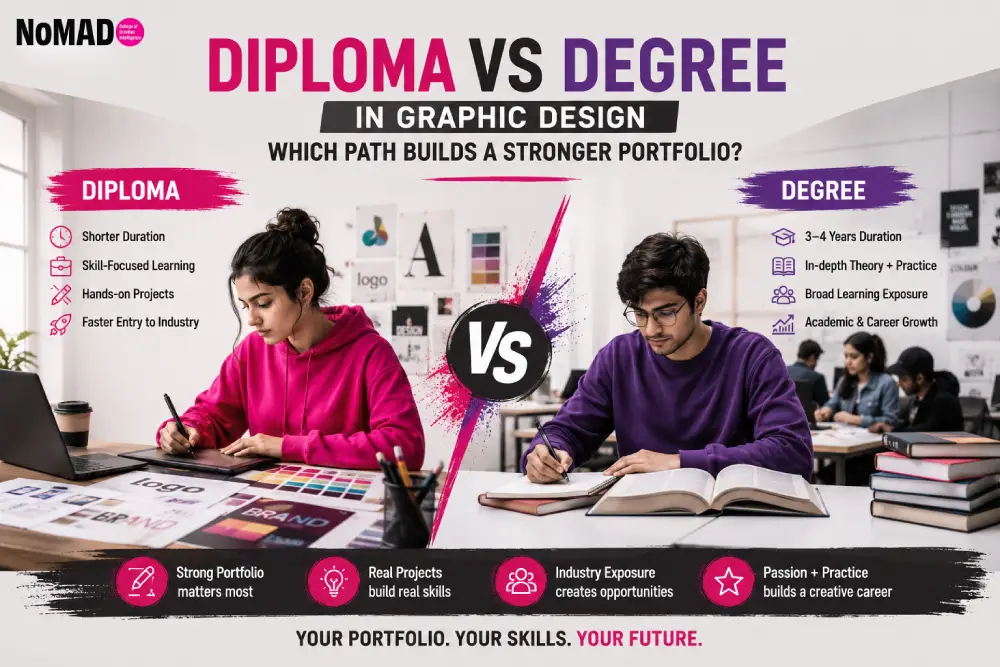
A diploma is a shorter, skills-focused qualification centred on practical craft, industry software and portfolio work. A degree is a longer academic award, usually three to four years, that combines projects with theory, research and wider subjects. Both teach core design principles, but they differ in depth, duration and structure.
In graphic design, a diploma moves quickly into hands-on work with tools such as Photoshop, Illustrator and InDesign, along with layout, typography and branding. A degree covers similar ground across more years and adds context, such as design history and research. For a fuller breakdown, see our graphic design diploma course guide.
| Factor | Diploma | Degree |
| Typical duration | Shorter, often several months to two years | Three to four years |
| Main focus | Practical craft, software and portfolio | Theory plus practice, research and breadth |
| Best suited to | Fast entry, career switchers and specialists | Broad foundation, academic pathways and generalists |
| Portfolio building | Immediate and intensive | Builds progressively across years |
| Typical progression | Work or further study | Postgraduate study or specialisation |
How Do the Two Paths Compare on Duration and Cost?
Diplomas are usually shorter and can cost less overall, while degrees run longer and often cost more because of their extended duration. Actual fees vary widely by institution, city and specialisation, so treat every figure as something to confirm directly with the college.
When weighing duration and cost, consider the time to a working portfolio and time to your first role, not only the price. Compare what each programme includes, such as software, mentorship and internships, rather than headline fees alone.
Which Builds Skills Faster: A Graphic Design Diploma Course or a Degree?
A graphic design diploma course often builds job-ready skills faster because it focuses on tools, craft and portfolio work from the start. A degree builds those skills more gradually while adding theory and context. The quicker route suits students who want to enter the industry sooner, while the broader route suits those who want a deeper foundation first.
Hands-On Craft Versus Broad Theory
A diploma typically packs in intensive practice on software, layout, typography, colour and branding, with frequent briefs that push you to produce finished work. A degree balances this craft with broader theory, such as design thinking, communication studies and research. Both matter, but the balance between doing and studying differs in each path.
A practical, craft-first approach usually helps you:
• build software fluency across tools such as Photoshop, Illustrator and InDesign
• practise layout, typography and branding on real briefs
• produce more portfolio pieces in a shorter time
• receive frequent, focused feedback on your craft
Portfolio Depth and Industry Readiness
Your portfolio is the single most important asset in a creative career. Depth comes from real projects, varied briefs and a clear point of view, not from the certificate itself. Industry readiness grows when you work on live briefs, receive mentorship and learn to present your thinking. Ask how much real project work each course offers.
What Do Employers Prefer?
Most design and advertising employers prefer a strong portfolio and clear creative thinking over qualifications on paper. A diploma or a degree can both open doors when the work is strong. Recruiters look at the quality of your ideas, your craft, your range and how well you solve real briefs, which is why building varied, well-presented work matters more than the certificate you hold.
If you are comparing creative courses after Class 12, it helps to see how a portfolio-first curriculum works in practice. Explore NoMAD’s Bachelor’s in Advertising and Communication Design programme to understand the subjects, portfolio focus and internship structure.
Which Path Suits Your Goals?
Choose a diploma if you want to enter the industry quickly, focus on craft and build a portfolio fast. Choose a degree if you want a broader academic foundation, more time to explore and a longer, structured journey. The right choice reflects your timeline, learning style, budget and career direction.
School Leavers and Career Switchers
School leavers who have just finished Class 12 often value a fuller experience that builds craft and confidence over time, whether through a degree or a portfolio-driven programme. Career switchers who already have some experience frequently prefer a focused diploma that rebuilds their skills and portfolio quickly. Your starting point should shape your decision.
Specialists Versus Generalists
Specialists go deep in one craft, such as graphic design or art direction, and a focused diploma can suit this ambition. Generalists work across strategy, design and communication, which a broader degree can support. Many strong creative professionals combine both, pairing a specialist craft with a broad understanding of brands and audiences.
How Does NoMAD Blend Craft and Real Projects?
NoMAD College of Creative Intelligence is built around hands-on creative education, real client projects and mentorship from working professionals. Its programmes weave practical skills into live briefs and industry experience, so students graduate with a portfolio that reflects real work.
The Bachelor’s in Advertising and Communication Design runs across four years and eight semesters, moving from foundation skills such as graphic design, typography and digital imaging into branding, motion graphics, digital campaigns and dedicated portfolio development, before a final year focused on national and international internships. For graduates and career changers, the two-year, portfolio-driven Post Graduate Diploma in Advertising and Media follows a similar approach, with the fitting positioning that your portfolio is your degree.
Students learn from practitioner-led faculty and build their craft in creative learning spaces across NoMAD’s Mumbai and Bangalore presence, with the Mumbai campus placing them at the centre of India’s creative capital. NoMAD alumni now work across leading agencies and brands, which reflects the value of portfolio first, industry-connected learning.
Ready to Choose the Right Design Path at NoMAD?
Whether you lean towards a diploma or a degree, the deciding factor is the portfolio you build and the real experience behind it. If you are still comparing creative courses after Class 12, a short conversation can help you match the right programme to your goals. Speak to a NoMAD admissions counsellor to discuss your options, or download the programme brochure for full curriculum details across the Bachelor’s and postgraduate pathways.
Frequently Asked Questions
Is a diploma as good as a degree in graphic design?
Both can lead to strong design careers, because employers hire on portfolio quality and creative thinking rather than certificate type. A diploma often builds practical skills and a working portfolio faster, while a degree adds theory and academic breadth. The better choice depends on your goals, timeline and how soon you want to start working.
Can a graphic design diploma get me an agency job?
Yes. A strong portfolio built during a graphic design diploma course can help you secure agency work, because agencies focus on the range and quality of your ideas and finished projects. Diplomas that include live briefs, mentorship and internships tend to produce portfolios that recruiters take seriously, which improves your chances of a creative role.
Which is cheaper, a diploma or a degree in graphic design?
Diplomas are often shorter and can cost less overall, while degrees usually cost more because of their longer duration. However, fees vary widely by institution, city and specialisation, so confirm exact costs with each college. Compare what is included, such as software, mentorship and internships, rather than the headline fee alone.
How long does a graphic design diploma course take?
Durations vary by institution and level, ranging from a few months for short courses to around one or two years for comprehensive programmes. A degree in graphic design or communication design usually takes three to four years. Confirm the exact duration, structure and portfolio outcomes with the college before applying.
What skills do you need for graphic design?
Core skills include software fluency in tools such as Photoshop, Illustrator and InDesign, along with a strong sense of layout, typography, colour and branding. Beyond software, you need creativity, attention to detail and the ability to take feedback. Most of these skills develop best through consistent, hands-on portfolio work.
Does NoMAD focus on portfolio building?
Yes. Portfolio building is central to NoMAD’s approach. Its programmes are built around real client projects, live briefs and mentorship from practising professionals, with dedicated portfolio development in the curriculum. Students study across NoMAD’s Mumbai and Bangalore presence and complete national and international internships, so they graduate with a portfolio designed to reflect industry-standard work.
Related Posts